

Table of Contents:
- What is L-Glutamine?
- How L-Glutamine Works
- L-Glutamine’s Role in Muscle Building
- L-Glutamine’s Benefits in Disease Support
- L-Glutamine for Leaky Gut Syndrome
What is L-Glutamine?
L-Glutamine is a non-essential amino acid, which means the body can produce it on its own. However, the body’s own production is reduced by stress factors and physical exertion. That’s why taking glutamine as a dietary supplement, for example through collagen, is highly recommended. The JARMINO Immun Collagen includes an additional 2.5g of premium L-glutamine per serving, supporting a healthy gut and a strong immune system.
Glutamine is closely related to glutamic acid. Both are amino acids, essential as building blocks of proteins. They play key roles in metabolic processes and contribute significantly to overall health.
With a concentration of 20 percent in blood plasma, glutamine is the most abundant amino acid. It also serves as an important energy source and is most plentiful in our muscles. Glutamine plays a key role in building and maintaining muscle.

In foods, glutamine is always found in a bound form. Plant-based sources include wheat and soy.
How glutamine works
If you often feel tired, consider adding L-glutamine to your daily routine — especially if you exercise regularly. It supports keeping the body healthy and boosts energy levels, helping you tackle everyday tasks and intense workout sessions with greater ease. Glutamine speeds up the body’s recovery after exercise. Athletes especially notice feeling more refreshed, even during heavy training schedules. This effect is due to glutamine’s ability to quickly restore glycogen stores.
Glycogen, which is made from carbohydrates in the diet, is primarily stored in muscle cells and provides energy to the body during periods of high demand. When glycogen stores run low, energy levels drop during exercise. Studies have shown that taking glutamine after training can accelerate and enhance the recovery process. This way, the body is replenished with fresh energy reserves ready for your next workout. This can be particularly interesting for athletes who train several times a day. Consuming carbohydrate-rich foods alone wasn't enough to refill glycogen stores as effectively as L-Glutamine, which conveniently contains no calories. Even glucose or maltodextrin couldn’t deliver results comparable to L-Glutamine.
L-Glutamine is the largest component of muscle tissue
The vital amino acid L-Glutamine, which constitutes a major part of our muscle mass, underlines the crucial role this compound plays in our body. L-glutamine is perfect for endurance athletes and can be naturally sourced, for example, from bone broth.
Glutamine is also great for athletes who experience the ‘open window’ syndrome after intense training. When you’re exhausted, your risk of catching colds or other infections increases. In these cases, taking L-glutamine as a preventive supplement can help. Studies with marathon runners have shown that taking glutamine after the race reduced their risk of colds by 50 percent. Those who didn’t take this supplement faced a significantly higher risk of getting colds.
L-glutamine helps protect against muscle loss
This natural supplement helps stop the breakdown of muscle proteins caused by exercise, meaning less muscle mass is lost and less energy is drawn from your muscles.
Side effects:
Glutamine is a natural dietary supplement and is safe to use.
In clinical trials, side effects were only observed at very high doses exceeding 30 g per kilogram of body weight. However, under normal conditions, no one consumes such amounts, so an overdose is not a concern. Still, as with all supplements, it’s important to avoid excessive dosing to prevent any intolerance.The right dosage:
Pure L-glutamine is often available in capsule form. If you work out three or more times a week, a daily intake is recommended. Be sure to stay well hydrated. You can take it in the morning, in the evening, or after your workout. L-Glutamine is also naturally found in collagen. Since collagen is recommended as a supplement for muscle building and achieving a toned body during workouts, you naturally get L-Glutamine when using a high-quality collagen powder.
Glutamine supports the immune system and helps strengthen your defenses. You can feel these benefits in a short time. The body efficiently processes glutamine because it is essential for antibody production.
Intense exercise can reduce your glutamine levels by up to 50 percent. Taking glutamine helps replenish these stores and boosts your immune cells. While the exact biochemical process of how L-Glutamine is used in the body is not yet fully understood, its positive effects are evident. Bound water may activate enzymes within the cells that influence glycogen storage. During very intense exercise and emotional stress, natural glutamine sources alone often aren’t enough to meet your body’s needs. Therefore, supplementing with glutamine in capsules or powder form is recommended . Be sure to choose high-quality products.

The Role of L-Glutamine in Illness
This amino acid can be life-saving in critical situations. Examples include burns, septicemia, or trauma. In these situations, glutamine levels are often low.
Supplementing with glutamine can help shorten hospital stays, reduce the risk of infections, and improve survival rates.
It is also beneficial for supporting a compromised intestine. Intestinal conditions such as Crohn’s disease, celiac disease, or irritable bowel syndrome can benefit from glutamine, which helps the intestinal lining to repair itself. This allows the body to better absorb nutrients from food. Taking L-glutamine supports intestinal health and can alleviate digestive discomfort.
A deficiency in L-glutamine can contribute to intestinal problems and conditions like leaky gut syndrome.
Glutamine and Leaky Gut Syndrome
Leaky gut refers to increased intestinal permeability. The intestinal lining acts as a barrier, but in leaky gut, this barrier is compromised, especially in the small intestine. This means that substances from the intestines can enter the bloodstream and potentially trigger chronic illnesses. These include arthritis, psoriasis, and migraines. Leaky gut is often closely connected to other intestinal conditions like celiac disease. That’s why L-glutamine for gut health is highly recommended. Find out more about leaky gut syndrome here: Leaky Gut Syndrome
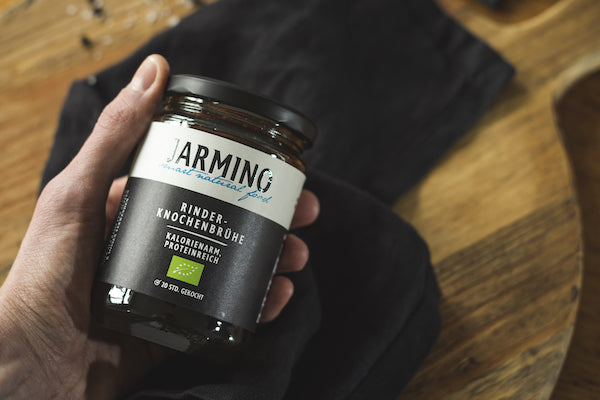
A time-tested remedy: Bone broth
Bone broth may have been forgotten by many, but it remains a powerful remedy that not only supports recovery from colds, boosts your immune system, but also provides athletes with renewed energy. Bone broth is also beneficial for intestinal conditions like leaky gut syndrome.
To make bone broth, you’ll need at least one kilogram of bones. Bones can be sourced from your butcher or meat shop, and even soup chickens work well. Store the bones in the freezer until you're ready to prepare the broth. Simmer the bones for several hours, adding a few spices to your liking along with vegetables such as carrots or onions and a splash of vinegar. Bone broth can be made in larger batches and stored in canning jars, which can also be frozen for convenience.
The bones contain collagen, which helps the broth made from bones thicken beautifully after a few hours. Collagen is also an important ingredient for the body and immune system. It complements L-glutamine perfectly. For athletes, bone broth rich in collagen is an excellent regimen.
Support your body with plenty of L-glutamine through the JARMINO Immun Collagen.


